
When families hear the words long-term care, the first fear is often:
“Are we going to lose everything?”
It’s a completely understandable reaction. After decades of saving, building a home, investing wisely, and planning for retirement, the idea of nursing home costs wiping it all away feels overwhelming.
But here’s the truth: Medicaid planning isn’t about panic. It’s about clarity.
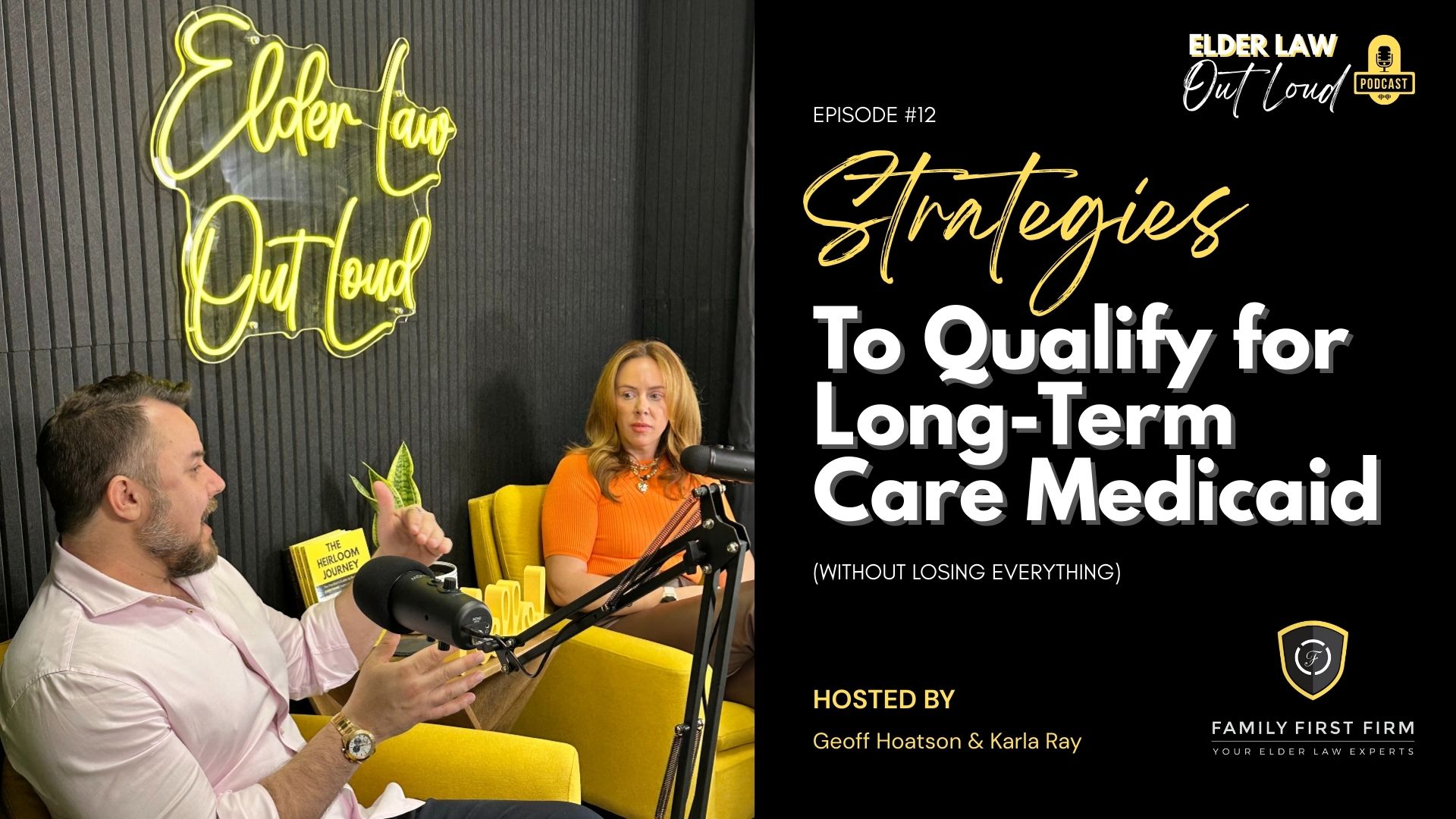
In our newest episode of Elder Law Out Loud, Family First Firm CEO Geoff Hoatson and Client Relations Manager Karla Ray break down how Long-Term Care Medicaid actually works- and the legal, strategic options families have to protect what they’ve worked so hard to build.
The Biggest Misconception About Medicaid Planning
Many people believe Medicaid planning is simply “spending down” assets until you qualify.
That’s not the full picture.
As Geoff explains in this episode:
“There are so many considerations when we do Medicaid planning. People think it’s just about getting Medicaid and while it is important to get Medicaid, there are tax implications, there are Medicaid payback provisions, probate avoidance, there are all these other pieces to balance.”
Qualifying for benefits is only one part of the strategy. True planning takes a comprehensive view of your financial, legal, and family situation.
Legal Strategies to Protect Assets
In this episode, we walk through lawful tools that may help families qualify for Long-Term Care Medicaid while preserving assets for a spouse or future generations.
These strategies can include:
- Properly structured asset transfers
- Income planning techniques
- Spousal protections
- Trust planning in certain circumstances
- Homestead considerations
- Exemption strategies
Every family’s situation is different. What works for one person may not work for another. That’s why individualized guidance is critical.
Timing Is Everything
One of the most important themes in this episode is timing.
The earlier you plan, the more flexibility you have.
Waiting until a loved one is already in a nursing home—or on the brink of needing care—can significantly limit your options. At that point, decisions are reactive instead of strategic.
Proactive planning allows families to:
- Maximize protection opportunities
- Reduce stress during crisis
- Avoid costly mistakes
- Create a smoother Medicaid approval process
The longer you wait, the fewer choices remain.
Common Medicaid Planning Tools Families Overlook
There are several tools families often don’t realize are available—or misunderstand completely.
Some assume gifting assets is the solution, without understanding the five-year look-back period. Others don’t realize how powerful properly drafted legal documents can be in a crisis.
Medicaid planning is a balancing act. Done correctly, it protects both today’s care needs and tomorrow’s legacy.
Why Preparation Creates Options, Not Panic
The goal is not to “hide” assets or cut corners. Medicaid planning must be done lawfully and strategically.
When families understand the rules, they gain clarity.
When they gain clarity, they gain confidence.
And confidence replaces fear.
The peace of mind that comes from knowing there is a plan in place—one that protects a spouse, preserves dignity, and respects a lifetime of hard work—is invaluable.
Key Takeaway: You Don’t Have to Lose Everything
Long-Term Care Medicaid does not automatically mean financial devastation.
There are legal pathways to qualify without sacrificing your entire life savings. But those pathways require proper planning, careful execution, and experienced guidance.
If you or someone you love may need long-term care in the future, this episode is essential listening.
Listen to the Full Episode here!
Whether you’re planning ahead or facing an immediate care need, this conversation offers practical insight that could make a meaningful difference in your family’s future.
Elder Law Out Loud is a monthly podcast co-hosted by Family First Firm CEO Geoff Hoatson and Client Relations Manager Karla Ray. For inquiries, contact karla.ray@fff.law.*