
When it comes to protecting your family, some of the most important decisions are made long before a crisis ever begins.
But here’s the challenge: most families don’t spend their days thinking about Medicaid eligibility, probate, long-term care or estate planning. These topics often come into focus only when something unexpected happens.
That’s why education matters.
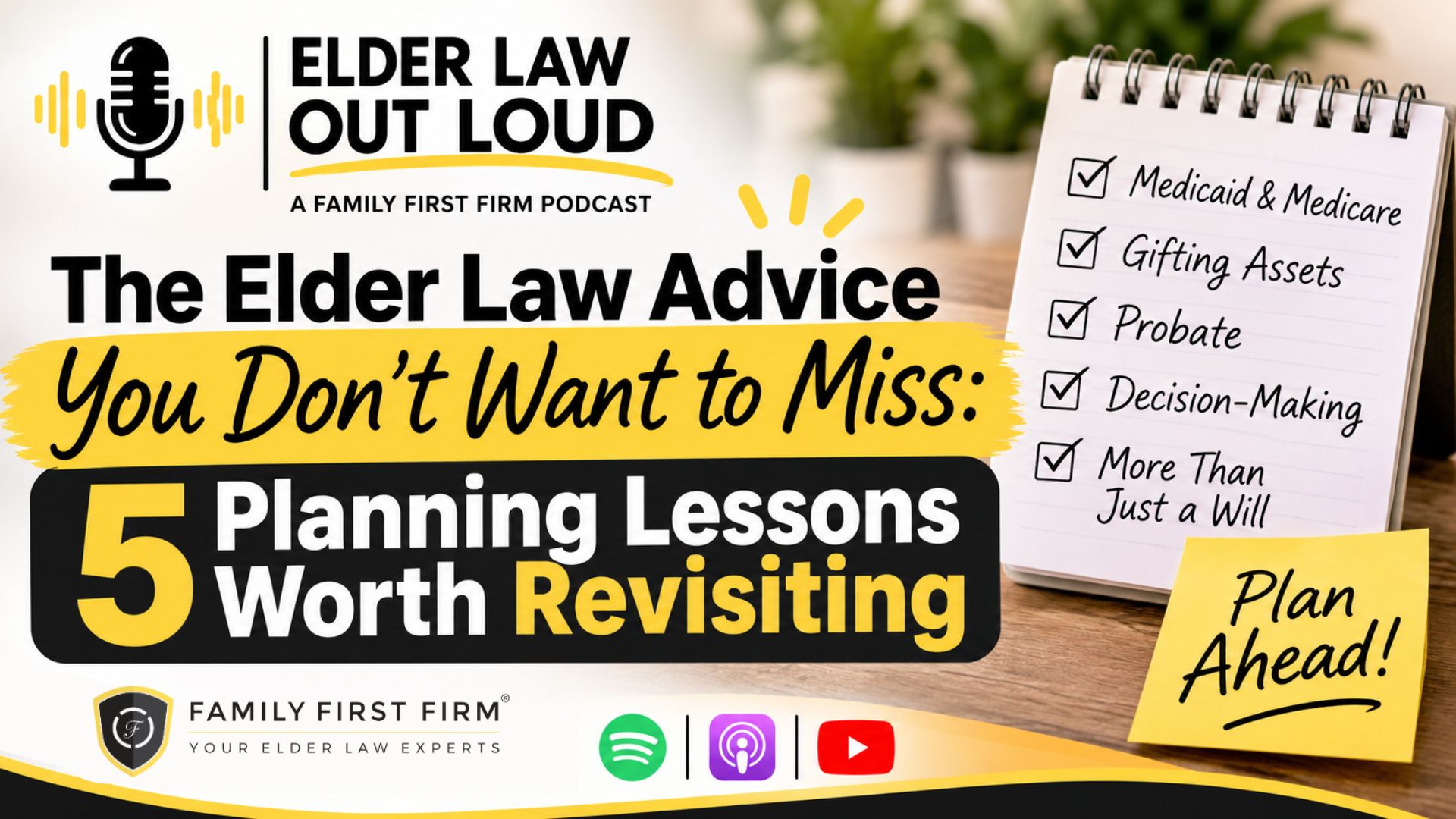
In our latest episode of Elder Law Out Loud, The Top Tips You May Have Missed, we’re revisiting important conversations and reminders from previous episodes, because sometimes the advice you need most is the advice you haven’t heard yet.
Here are five elder law planning lessons worth revisiting.
1. Medicaid and Medicare Are Not the Same Thing
One of the most common misconceptions families encounter is the belief that Medicare will pay for long-term nursing home care.
Medicare and Medicaid serve different purposes. Medicare generally provides limited coverage for qualifying skilled nursing care following an eligible hospitalization. It does not provide unlimited coverage for ongoing custodial care.
Medicaid, on the other hand, may help cover qualifying long-term care costs for individuals who meet applicable eligibility requirements.
Understanding the difference before a care crisis occurs can help families make more informed decisions about their options.
2. Giving Away Money Can Affect Medicaid Eligibility
Many families assume that transferring money to children or other loved ones is a straightforward way to protect assets.
But Medicaid has rules governing certain transfers of assets, and gifts may create a penalty period that delays eligibility for benefits.
Importantly, Medicaid’s rules are not the same as IRS gift tax rules. A transfer that doesn’t create a federal gift tax liability may still have Medicaid consequences.
Before making significant gifts or transfers, families should understand how those decisions could affect future eligibility.
3. A Will Doesn’t Automatically Avoid Probate
A will is an important estate planning document. It communicates your wishes and identifies how certain assets should be distributed after your death.
But having a will does not automatically mean your estate will avoid probate.
Probate is the legal process through which certain assets are administered and distributed after someone dies. Depending on how property is owned and how beneficiary designations are structured, some assets may pass outside probate while others require court administration.
The way your assets are titled can be just as important as the documents you have signed.
4. Your Adult Children May Not Automatically Have Authority to Make Decisions for You
Many people assume that once their children reach adulthood, they can automatically step in and make medical or financial decisions if something happens to them.
That isn’t necessarily the case.
Without appropriate legal documents, loved ones may encounter significant obstacles when trying to access information or make decisions on someone’s behalf.
Estate planning can include documents designed to identify trusted individuals who may act for you when you cannot act for yourself.
Planning ahead can help reduce uncertainty for the people who may one day need to step in.
5. Estate Planning Is About More Than What Happens After You Die
Estate planning is often associated with wills, inheritances and distributing property.
But comprehensive planning can also address what happens during your lifetime.
Who can manage your finances if you become incapacitated? Who can make healthcare decisions? How might your assets be protected if long-term care becomes necessary? What would happen to your family if you were suddenly unable to communicate your wishes?
These are questions worth answering before an emergency.
The Best Time to Plan Is Before You Need To
The common thread in these lessons is simple: planning ahead creates opportunities.
Whether you’re preparing for retirement, helping an aging parent or raising a family, understanding the legal and financial considerations that affect your future can make a meaningful difference.
That’s why we continue to share educational conversations through Elder Law Out Loud.
Our latest episode, The Top Tips You May Have Missed, revisits important advice from earlier episodes and offers another opportunity to learn something that could matter to you or someone you love.
Listen, Learn and Plan Ahead
Don’t miss the latest episode of Elder Law Out Loud.
Listen on Spotify or Apple Podcasts, or watch on YouTube.
And remember: every family’s circumstances are different. General education is a starting point, not a substitute for individualized legal advice.
At Family First Firm, we’re here to help families understand their options and plan for the future.
Because protecting your family starts with knowing what you need to know.