
Artificial intelligence has changed the way we live. For better or worse, many now rely on AI to write emails, draft resumes, generate meal plans… the list goes on—even as far as generating legal documents.
Wait, seriously? Using AI to draft your estate plan?
It happens, and our team has worked with many clients after these AI-drafted plans fail to do what was intended.
Though these free services can produce documents that look like the real deal, there are nuances that to estate planning that require a human touch. Technically, AI can produce words on a page, but when it comes to your family, your assets, and your legacy, only an experienced estate planning and elder law attorney can create a legally sound, strategic plan to help your loved ones avoid probate.
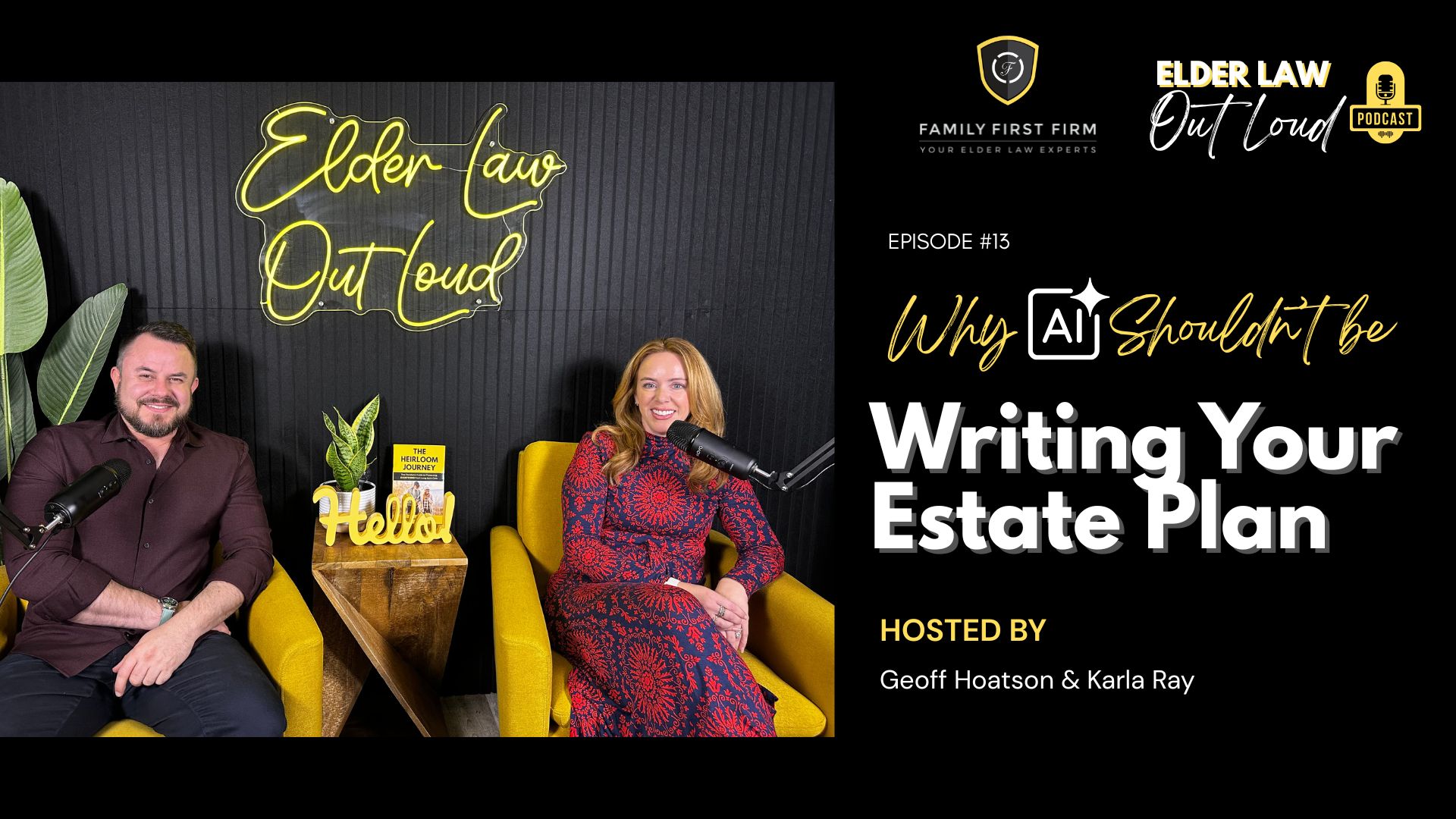
In our latest podcast episode, we break this down in detail, including where AI can be helpful, and where it becomes dangerous.
Estate Planning Is More Than a Stack of Documents
One of the biggest misconceptions about estate planning is that it’s just paperwork. On the contrary, estate planning is strategy.
A proper estate plan coordinates:
- Your family dynamics
- Your financial structure
- Your long-term care planning
- Asset protection goals
- Probate avoidance strategies
- Tax considerations
- Government benefit eligibility
AI doesn’t know:
- If you have a blended family
- If one child struggles financially
- If a beneficiary receives disability benefits
- If you’re concerned about divorce, creditors, or lawsuits
- If Medicaid planning needs to be integrated
- How to properly protect a homestead
An algorithm cannot replace a conversation about your values, your concerns, and your goals.
Florida Law Is Specific- and Subject to Change
Estate planning is highly state-specific. In Florida, for example:
- Certain documents must be signed in very particular ways
- Witness requirements are strict
- Notarization rules matter
- Probate laws impact how assets transfer
AI tools may miss important technical requirements with documents you would never know don’t actually comply with Florida law. Small mistakes can invalidate a will, a poorly structured trust can fail to avoid probate, and an improperly drafted clause can cause conflict between heirs. Close enough is not enough when it comes to legal documents.
AI Can’t Predict the Problems You Don’t Know Exist
Most families don’t call an estate planning attorney because everything is simple.
They call because:
- There’s a second marriage
- There are minor children
- There’s a special needs child
- There’s a family business
- There’s significant real estate
- There’s concern about long-term care costs
AI can spit out answers, but an experienced attorney will ask the questions you didn’t think to ask.
Estate Planning Is Also About Incapacity
Many people focus only on what happens after death. But a major part of estate planning is preparing for incapacity.
Who can:
- Access your accounts?
- Make medical decisions?
- Pay your bills?
- Manage your business?
Without properly prepared powers of attorney and advance directives, your loved ones may need to go to court for guardianship just to help you.
AI cannot anticipate how these documents must work together in a real-life emergency, and what’s worse, the documents may not hold up when you need to use them.
Mistakes Show Up at the Worst Possible Time
Here’s the hardest truth: You may not know an AI-generated estate plan was inadequate, until your family is already grieving.
That’s when:
- The bank won’t honor a document
- A trust wasn’t properly funded
- A clause creates ambiguity
- Probate becomes unavoidable
- Family conflict erupts
Estate planning documents are rarely used until something serious happens. That’s not the time to discover it wasn’t done correctly.
Where AI Can Be Helpful
To be clear, AI isn’t the enemy.
It can be helpful for:
- Creating a checklist
- Learning terminology
- Organizing questions before a consultation
- Understanding general concepts
But it should not replace individualized legal advice.
We discuss this balance in depth in our latest episode of Elder Law Out Loud, and share practical guidance for families navigating tech-driven legal shortcuts.
🎙️ Listen to the full episode here: Elder Law Out Loud | Podcast on Spotify
Family First Firm- Where Your Estate Planning Is Personal
Your estate plan reflects your relationships, your responsibilities, your assets, and your future care. Technology can assist, and templates can streamline, but protecting your legacy requires human judgment, legal expertise, and strategy.